

Last Updated: November 10, 2026
Quick Summary
The best clean beauty brands for sensitive skin publish full ingredient lists, skip fragrance and essential oils, and keep formulas short. Screen every product for fragrance, parfum, aroma, and essential oils, since these are the most common triggers for reactive skin. Treat seals like Clean at Sephora as a starting filter, not a safety guarantee.
- A trustworthy brand lists every ingredient, including fragrance components, on the label.
- Fewer ingredients means fewer chances for a reaction, so short formulas suit reactive skin.
- Sephora's clean seal bans parabens and phthalates but does not ban fragrance or essential oils.
- Under fifteen ingredients is a good sign for sensitive skin; count them on the box.
- Patch test on your inner forearm or behind your ear for 24 to 48 hours first.
Table of Contents
- What Makes a Clean Beauty Brand Safe for Sensitive Skin
- Ingredients to Exclude When Choosing Clean Beauty Brands
- Best Clean Skincare Brands for Reactive and Eczema-Prone Skin
- A Practical List of Clean Makeup Brands for Sensitive Skin
- What Dermatologists Look for in Clean Beauty Brands for Sensitive Skin
- Clean Beauty Brands at Sephora: What to Check Before You Buy
- Patch Testing and Introducing New Products Safely
- Building Your Sensitive-Skin Routine with Penny's Treasure Chest
- Frequently Asked Questions
What Makes a Clean Beauty Brand Safe for Sensitive Skin
Clean beauty is a skincare category built around avoiding ingredients linked to irritation, hormone disruption, or long-term health concerns. For sensitive skin, the safest clean beauty brands are the ones that publish full ingredient lists, skip fragrance and essential oils, and keep formulas short. This guide walks through what actually matters when you compare options.
Here's the uncomfortable truth most roundups skip: "clean" has no legal definition. A brand can slap a leaf on the label and change nothing inside the bottle. So the question isn't whether a brand calls itself clean. It's whether the formulation is gentle enough for reactive skin. Our guide on how to identify greenwashing in skincare products shows what to check before trusting a brand's claims.
That distinction is the thread running through everything below. We'll show you which standards hold up, which ingredients to avoid, and how to test anything new before it touches your face.
The Ingredient Standards That Actually Matter
Three standards separate genuinely safe formulas from marketing.
Full disclosure. A trustworthy brand lists every ingredient, including fragrance components. If the label says "parfum" and nothing else, you can't assess it.
Short ingredient lists. Fewer ingredients means fewer chances for a reaction. A five-ingredient facial oil beats a thirty-ingredient serum for reactive skin almost every time.
Third-party testing. Independent patch testing and dermatological review carry more weight than a brand's own claims. Look for this stated plainly on the product page.
What most guides miss is that "natural" and "safe" aren't synonyms. Botanical extracts, cold-pressed oils, and plant essences can all trigger contact dermatitis. Poison ivy is natural too.
Ingredients to Exclude When Choosing Clean Beauty Brands
Start your elimination list with fragrance and essential oils. These are the two most common triggers for reactive and eczema-prone skin, and they hide under many names.
Here's what to screen for:
- Synthetic fragrance: listed as "fragrance," "parfum," or "aroma"
- Essential oils: lavender, citrus peel, peppermint, eucalyptus, tea tree
- Parabens: methylparaben, propylparaben, butylparaben
- Phthalates: often hidden inside fragrance blends
- Drying alcohols: denatured alcohol, isopropyl alcohol high on the list
- Harsh surfactants: sodium lauryl sulfate in cleansers
- Common preservative allergens: methylisothiazolinone, formaldehyde releasers
Watch out: a product labeled "unscented" can still contain masking fragrance. Only "fragrance-free" tells you the formula has no scent component at all.
Best Clean Skincare Brands for Reactive and Eczema-Prone Skin
The best clean skincare brands for sensitive skin share a pattern: fragrance-free formulas, minimal ingredient lists, and clear labeling. But a pattern is not a shopping list. Below are specific brands that meet the criteria, with the product-level details that matter for reactive and eczema-prone skin.
How These Brands Were Selected
We screened each brand against four non-negotiable standards: full ingredient disclosure (including fragrance components), explicit fragrance-free and essential-oil-free status, short ingredient counts, and stated dermatological testing. Brands that use "parfum" without disclosure or rely on essential oils as preservatives were excluded.
Fragrance-Free Skincare Brands Worth Considering
Avène focuses on sensitive skin with its Tolerance and Extremely Gentle Cleanser lines. These are fragrance-free and built around the brand's thermal spring water, which is claimed to soothe irritation. The ingredient lists are short, and the brand publishes full disclosure. As with any brand, verify the specific product rather than assuming the whole line is safe.
Eczema-Prone Skin: What to Look For and What to Avoid
No cosmetic is a treatment for eczema, and any brand implying otherwise deserves skepticism. What you want is a gentle formulation that supports the skin barrier without adding irritants.
For eczema-prone skin, prioritize moisturizers with ceramides, glycerin, or petrolatum. Avoid products with fragrance, essential oils, and drying alcohols. Watch out: a product labeled "unscented" can still contain masking fragrance. Only "fragrance-free" tells you the formula has no scent component at all.
A Note on Natural and Organic Brands
Natural and organic brands are not automatically safer for sensitive skin. Botanical extracts, cold-pressed oils, and plant essences can all trigger contact dermatitis. Poison ivy is natural too. If you prefer natural formulations, look for brands that are transparent about essential oil content and offer fragrance-free options. Our Face & Body Coconut Lotion in Pineapple Coconut is built on raw, cold-pressed coconut oil with essential oil aromas. If you react to fragrance, patch test first, since aromatic ingredients are a known trigger for some sensitive skin types.

A Practical List of Clean Makeup Brands for Sensitive Skin
Clean makeup is harder than clean skincare. Color cosmetics need pigments, binders, and preservatives, and "clean" claims vary wildly across the category.
When you build a list of clean makeup brands worth trying, screen for these:
- Fragrance-free foundations and concealers. Liquid formulas often carry scent.
- Mineral-based powders. Fewer ingredients, lower irritation risk.
- Cream blushes without essential oils. Check the full list, not the front label.
- Mascara with short ingredient lists. Avoid fiber formulas if your eyes water easily.
- Lip products without synthetic fragrance or drying alcohols.
The practical move is to treat makeup and skincare as one system. If your moisturizer is fragrance-free, your foundation should be too. Mixing a clean base with a scented concealer undoes the work.
What Dermatologists Look for in Clean Beauty Brands for Sensitive Skin
Dermatologists tend to be less interested in the "clean" label than in three concrete things: the full ingredient list, the absence of known allergens, and evidence the product was tested on sensitive skin.
When you search for the best clean beauty brands for sensitive skin dermatologist-reviewed sources mention, the same names recur because they meet those tests. The pattern is consistent: fragrance-free, essential-oil-free, short formulas with transparent labeling.
A useful habit is to read the ingredient list the way a clinician would. Scan for fragrance first. Then check for drying alcohols in the top five ingredients. Then look at preservatives. If a brand publishes all three clearly, it's earned a second look.
Clean Beauty Brands at Sephora: What to Check Before You Buy
Retail shelves make clean beauty easier to find and harder to verify. The "Clean at Sephora" seal excludes a defined list of ingredients, but it does not guarantee a product suits reactive skin. This section claims a gap most roundups miss: a transparent, product-level comparison of what is actually available at Sephora, including price per ounce and packaging, so you can make a practical choice rather than rely on a seal.
What the "Clean at Sephora" Seal Actually Means
Sephora's clean program bans a specific list of ingredients, including parabens, phthalates, formaldehyde releasers, and certain sulfates. It does not ban fragrance or essential oils across the board. That means a product can carry the seal and still contain the two most common triggers for reactive skin. Treat the seal as a starting filter, not a safety guarantee.
Product-Level Comparison: What to Check In-Store
When you evaluate a clean product at Sephora, compare these concrete factors:
- Price per ounce. A $40 moisturizer in a 1.7 oz jar costs about $23.50 per ounce. A $15 moisturizer in a 3 oz tube costs $5 per ounce. For sensitive skin, you often pay more for shorter ingredient lists, but compare the math before assuming the expensive option is better.
- Packaging. Airless pumps and tubes limit exposure to air and bacteria, which matters for preservative-free or low-preservative formulas. Jars require dipping fingers and introduce contamination risk.
- Fragrance status. Search the ingredient list for "fragrance," "parfum," or "aroma." If present, set it down. "Unscented" is not the same as "fragrance-free."
- Ingredient count. Under fifteen ingredients is a good sign for sensitive skin. Count them on the box, not the front label.
- Return window. Know the return policy before checkout so a failed patch test is not a lost purchase.
Specific Clean Brands at Sephora to Consider
Saie offers clean makeup and skincare with fragrance-free options. The brand discloses ingredients and avoids essential oils in many products, but verify individual items.
The Pre-Purchase Check We'd Run In-Store
- Flip the box. Read the full ingredient list, not the front claims.
- Search for "fragrance" and "parfum." If present, set it down.
- Count the ingredients. Under fifteen is a good sign for sensitive skin.
- Look for "fragrance-free," not "unscented." They are not the same.
- Ask for a sample. Most counters will provide one for patch testing.
- Check the return window. Know your options before you commit.
For a step-by-step process on testing new products, see our guide on how to patch test a new botanical face oil safely.
Before you buy, compare these concrete factors on the box and the price tag.
| Factor | What to check | Note |
|---|---|---|
| Price per ounce | $40 in 1.7 oz is about $23.50 per ounce | $15 in 3 oz is $5 per ounce |
| Packaging | Airless pumps and tubes | Jars add contamination risk |
| Fragrance status | Search for fragrance, parfum, or aroma | Unscented is not fragrance-free |
| Ingredient count | Under fifteen ingredients is a good sign | Count them on the box |
| Return window | Know the return policy before checkout | A failed patch test is not a lost purchase |
Patch Testing and Introducing New Products Safely
Patch testing is the single most useful habit for reactive skin. It costs a few days and prevents most bad reactions from ever reaching your face.
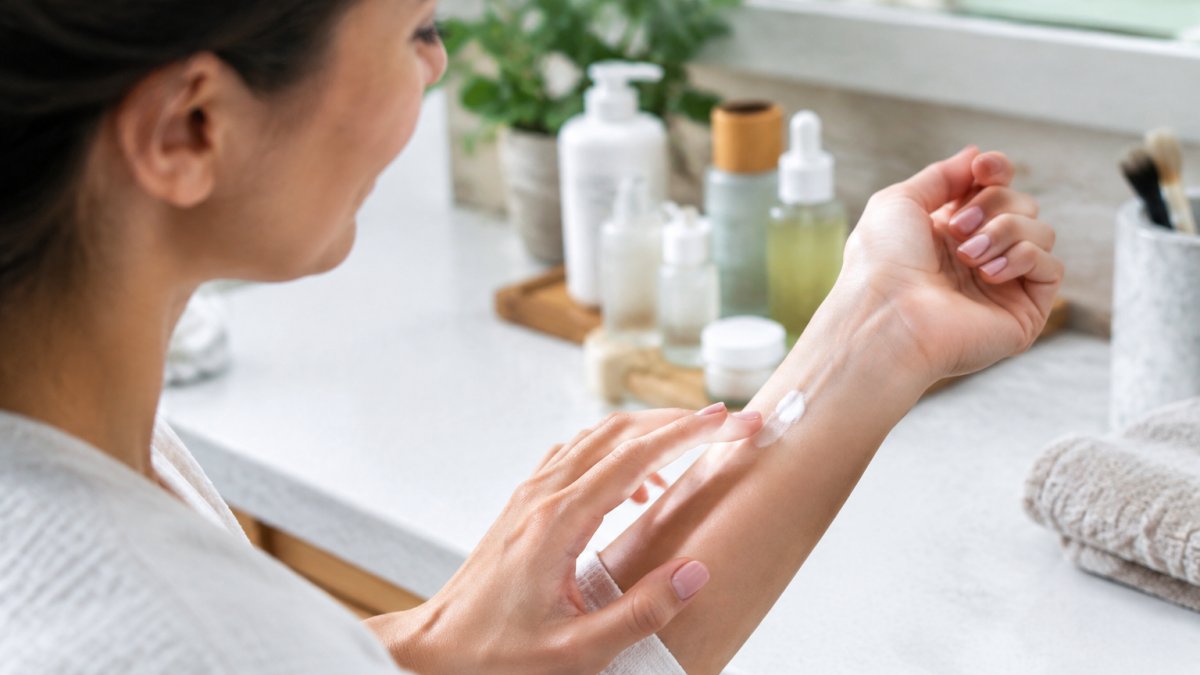
Apply a small amount to your inner forearm or behind your ear. Wait 24 to 48 hours and watch for redness, itching, or swelling. If nothing appears, repeat on a small patch of jawline before full-face use.
Introduce one product at a time, with at least a week between new additions. If a reaction appears, you'll know exactly what caused it. Our step-by-step guide on how to patch test a new botanical face oil safely walks through the full process.
Building Your Sensitive-Skin Routine with Penny's Treasure Chest
A sensitive-skin routine works best when it stays simple: a gentle cleanser, one treatment, a moisturizer, and sunscreen. Every extra product is another variable to isolate if something goes wrong.
At Penny's Treasure Chest, we curate clean beauty and wellness essentials with natural ingredients and accessible pricing. Start with the basics and add only what your skin tolerates.
For a concrete sequence to follow, our natural skincare routine for glowing skin lays out seven steps. When you're ready to assemble your own lineup, you can browse our skincare collection to find gentle, fragrance-conscious options that fit your skin.
Building a clean routine for reactive skin takes patience, and the trial-and-error phase is where most people give up. Penny's Treasure Chest makes that process easier with handpicked, affordable clean beauty products, free shipping on orders over $200, and a 30-day exchange guarantee if something doesn't suit your skin. Get started with Penny's Treasure Chest and build a routine your skin can actually tolerate.
Frequently Asked Questions
What is the best beauty brand for sensitive skin?
There is no single best brand, because sensitive skin reacts to different ingredients from person to person. Focus on brands that publish full ingredient lists, skip fragrance and essential oils, and keep formulas short. Look for gentle cleansers, fragrance-free moisturizers, and facial oils with few ingredients. Patch test any new product on your inner arm for 48 hours before applying it to your face, and introduce one product at a time so you can identify what causes a reaction.
What ingredients should people with sensitive skin avoid in skincare?
Watch for fragrance, essential oils, alcohol denat, sulfates, and preservatives like methylisothiazolinone, which are common irritants. Parabens and phthalates are also worth excluding if you want a cleaner formula. Some people react to botanical extracts and allergens such as limonene or linalool, even in natural products. Read the full ingredient list rather than trusting front-of-pack claims, and keep a note of anything that triggers redness, stinging, or itching.
Are fragrance-free products better for sensitive skin?
Fragrance-free formulas are usually the safer choice for reactive skin. Fragrance is one of the most common causes of contact irritation and allergic reactions in skincare and makeup. Note that unscented does not always mean fragrance-free, since some products use masking fragrances to cover ingredient smells. Check the label for the words fragrance-free and scan the ingredient list for parfum, aroma, and essential oils, which can irritate skin even when they are natural.
Should I patch test clean beauty products before using them?
Yes. Clean and natural ingredients can still cause reactions, so patch testing matters regardless of how a product is marketed. Apply a small amount to your inner forearm or behind your ear, leave it for 24 to 48 hours, and check for redness, itching, or swelling. If there is no reaction, try it on a small area of your face first. Introduce one new product at a time so you can tell which one is responsible if irritation appears.


