

Table of Contents
- Why Affordable Gut Health Supplements Are Worth It
- Quick Comparison: 4 Affordable Gut Health Supplements
- 1. Flora Biome Complete Gut Health Probiotic Blend: Best for Microbiome Support
- 2. Debloat Powder: Best for Bloating and Digestive Discomfort
- 3. Spearmint Leaf Full Spectrum Digestive Supplement: Best Budget Capsule
- 4. Oregano Oil Supplement: Best Herbal Support for Gut Balance
- How to Choose a Probiotic on a Budget
- Fiber Supplements for Digestion: What to Know Before You Buy
- Frequently Asked Questions
Last Updated: October 21, 2026
Why Affordable Gut Health Supplements Are Worth It
At Penny's Treasure Chest, we've built our entire catalog around a simple belief: affordable health supplements for gut health can work just as well as premium-priced ones, provided you match the right ingredient to the right problem.

The catch is that "gut health" is a vague term. It covers bloating, irregularity, poor digestion, and microbiome balance, and each of those needs a different kind of support. Spend money on the wrong category and you'll feel nothing.
Below, we break down four affordable health supplements for gut health, compare their real costs, and explain which one fits which problem. We also cover how to choose a probiotic on a budget and what to know about fiber supplements for digestion before you buy.
Quick Comparison: 4 Affordable Gut Health Supplements
Here's how the four picks stack up on price, format, and best use case.
| Product | Format | Best For | Key Ingredients |
|---|---|---|---|
| Flora Biome Complete Gut Health Probiotic Blend | Liquid | Microbiome support | 10 probiotic strains, 18 fermented herbs |
| Debloat Powder | Powder | Bloating and discomfort | Digestive enzymes, dandelion root, horsetail extract |
| Spearmint Leaf Full Spectrum | Capsules | Budget daily capsule | Full-spectrum spearmint leaf extract |
| Oregano Oil Supplement | Softgels | Herbal gut balance | Mediterranean oregano, carvacrol |
Sticker price is the least useful number on a supplement label. What matters for affordability is cost per serving and cost per month at the label's suggested dose. The table below translates each product into those terms so you can compare them on the same basis.

| Product | Container Size | Suggested Serving | Servings per Container | Cost per Serving | Cost per Month (30 days) |
|---|---|---|---|---|---|
| Flora Biome Liquid Probiotic | 16 oz | 1 tbsp (0.5 oz) | 32 | ~$5.87 | ~$176 |
| Debloat Powder | 200 g | 1 scoop (~5 g) | 40 | ~$3.30 | ~$99 |
| Spearmint Leaf Capsules | 60 capsules | 1 capsule | 60 | ~$0.88 | ~$26 |
| Oregano Oil Softgels | 150 softgels | 1 softgel | 150 | ~$0.27 | ~$8 |
A few things jump out once you do the math. The oregano oil looks like the cheapest bottle and it is also the cheapest per day, but that's misleading for daily use because most people treat it as a short course rather than a permanent supplement. The spearmint capsules are the true budget daily habit at under a dollar a serving. The liquid probiotic and debloat powder carry high upfront prices but their per-serving cost is in line with premium capsules once you account for how long each container lasts.
One caveat on these numbers: serving sizes vary by product and by person. If you start with a half serving to test tolerance, your real cost per month will be lower than the table shows. If you double up during a flare, it will be higher. Treat the table as a starting point, not a guarantee.
1. Flora Biome Complete Gut Health Probiotic Blend: Best for Microbiome Support
If your goal is broad microbiome support rather than a single symptom, this is the one we'd point you toward first.
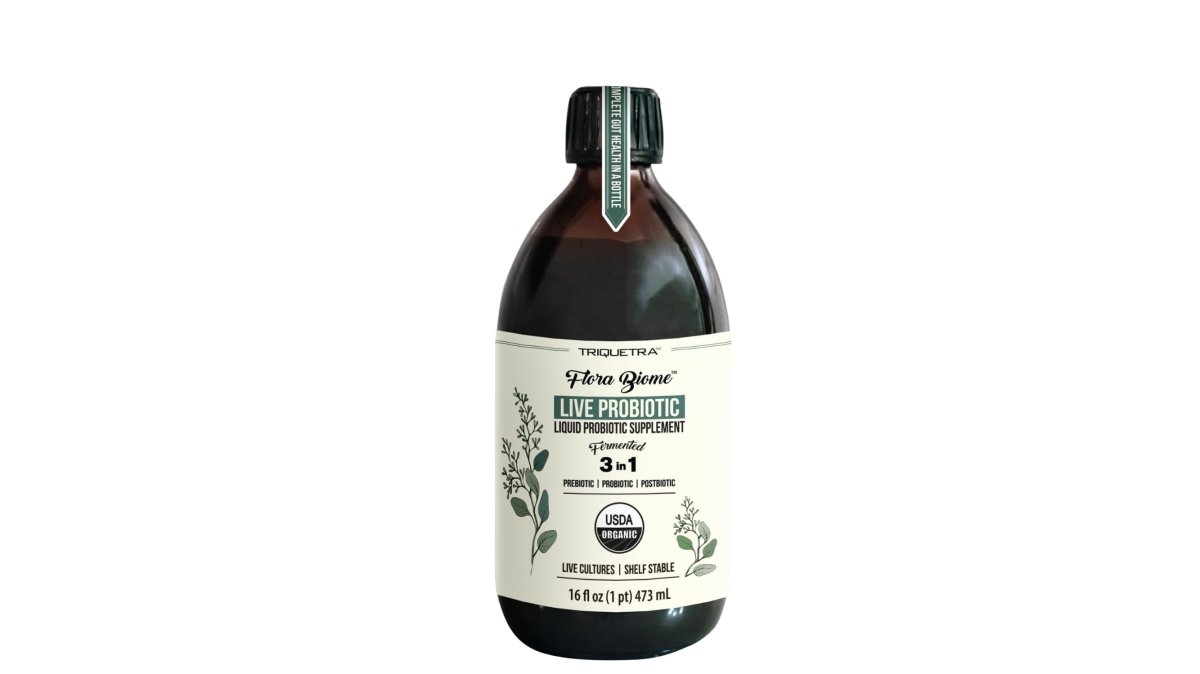
The liquid format matters more than it sounds. The formula is acid-resistant and shelf-stable, designed to protect live cultures as they pass through the digestive system, and it holds potency for up to a year before opening. Refrigerate after opening.
What works: The three-in-one approach covers more ground than a plain probiotic capsule. The fermented herbs produce postbiotic metabolites, including enzymes and short-chain fatty acids, that support digestion and nutrient absorption.
What to know: At $187.99 for a 16 oz bottle, it's the largest upfront spend on this list. It's also non-GMO and made with organic ingredients, so you're paying for the formulation rather than the packaging.
2. Debloat Powder: Best for Bloating and Digestive Discomfort
Bloating is a symptom, not a condition, and it usually responds better to enzymes and herbal support than to probiotics alone. That's exactly what this peach mango powder is built for: a blend of gentle digestive enzymes with dandelion root, hibiscus flower, nettle leaf, juniper berry, and horsetail extract.
The formula is also rich in potassium, magnesium, and chloride, which help maintain healthy fluid balance. That matters because a lot of bloating is water retention as much as gas.
What works: It's genuinely pleasant to take. One scoop in 8 to 12 oz of water makes a flavored drink, which is far easier to keep up with than swallowing capsules. The 200 g container goes a long way.
What to know: $131.99 is a real commitment if you're only occasionally bloated. If discomfort is a daily pattern, the cost per serving drops considerably.
NIH Office of Dietary Supplements fact sheets
3. Spearmint Leaf Full Spectrum Digestive Supplement: Best Budget Capsule
For the lowest-cost daily routine, spearmint leaf is hard to beat. Each serving delivers a full-spectrum spearmint leaf extract at 400 mg, in 60 capsules for $52.99.

Spearmint is traditionally known to help support healthy hormone levels, especially in women, contributing to clearer skin and improved internal balance.
What works: Simple, plant-based, and easy to take daily.
What to know: Full-spectrum extracts preserve the plant's natural compounds, but spearmint is a gentle herb. Give it a few weeks before judging results.
Flora Biome Complete Gut Health Probiotic Blend →
4. Oregano Oil Supplement: Best Herbal Support for Gut Balance
Oregano oil is the most traditional option here and the cheapest to start at $39.99 for 150 softgels. Each quick-release softgel delivers oil derived from Mediterranean oregano, rich in naturally occurring carvacrol.
What works: The value is excellent. 150 softgels is a long supply, and the formula is free of gluten, wheat, artificial flavors, artificial sweeteners, preservatives, and GMOs. It's laboratory tested and backed by a satisfaction guarantee.
What to know: Many users treat it as a short-course herbal support rather than a permanent fixture in their routine. Start with one softgel and see how you respond.
How to Choose a Probiotic on a Budget
Choosing a probiotic comes down to three things: strain diversity, delivery format, and cost per serving. Ignore the marketing claims and check those three.
- Strain count: More strains isn't automatically better, but a multi-strain formula covers more ground than a single-strain one. Ten strains, as in Flora Biome, is a solid range. Look for genus and species names (for example, Lactobacillus acidophilus) rather than a vague "probiotic blend."
- Delivery format: Shelf-stable liquids also avoid the shipping and storage problems that kill potency in refrigerated products.
- Cost per serving: Divide the bottle price by the number of servings, not the number of capsules. A $187.99 bottle that lasts months can cost less per day than a cheap capsule you replace every three weeks.
- Third-party testing: Look for laboratory-tested products and clear labeling. Vague "proprietary blend" language with no strain names is a red flag.
- Added prebiotics: A formula that includes prebiotics feeds the probiotics you're paying for. That's a genuine value add at any price.
FDA guidance on dietary supplement labeling
Match the supplement to the symptom, not the label
Use this decision guide before you spend:
- Irregularity or hard stools: Fiber first. A soluble fiber supplement is cheaper per serving than most probiotics and directly addresses the problem.
- Bloating and gas after meals: Digestive enzymes or a debloat formula with enzymes and herbal support.
- Broad microbiome support or post-antibiotic recovery: A multi-strain probiotic with prebiotics makes sense here. This is the category where the liquid probiotic earns its price.
- Occasional upset or travel-related discomfort: A gentle single-herb option like spearmint is a low-cost first step. Oregano oil is better reserved for short courses rather than daily use.
What the evidence actually supports
Affordability only matters if the ingredient works. A realistic read on the four categories in this article:
- Probiotics:
- Fiber: It is also the cheapest per serving.
- Digestive enzymes:
- Herbal options (spearmint, oregano oil):
If you're new to probiotics, start with one product for at least four weeks before adding another.
Fiber Supplements for Digestion: What to Know Before You Buy
Most adults don't get enough dietary fiber from food, and a fiber supplement closes that gap for a few cents a day.
Three things to check before buying:
- Type of fiber: Soluble fiber supports regularity and feeds gut bacteria. Insoluble fiber adds bulk. Most people benefit from soluble.
- Tolerance: Start with a small dose and increase slowly. Jumping straight to a full serving causes gas and cramping, which is the opposite of what you wanted.
- Hydration: Fiber needs water to work. Take it with a full glass and drink more throughout the day.
Natural ways to improve gut health should come first: vegetables, legumes, whole grains, fermented foods, and enough water. Supplements fill gaps, they don't replace the foundation.
Harvard T.H. Chan School of Public Health on fiber
Building a gut health routine that actually works doesn't require a premium budget, but it does require matching the supplement to your specific problem. Bloating, irregularity, and microbiome balance each call for different support, and buying the wrong category is the fastest way to waste money.
At Penny's Treasure Chest, we've curated our gut health range around exactly that principle: handpicked, premium quality products at accessible prices, with free shipping on orders over $200, 24/7 online support, and a 30-day exchange guarantee so you can try something without risk. Start with the Spearmint Leaf capsules if you want a low-cost daily habit, or the Flora Biome liquid probiotic if you're ready to support your microbiome properly.
Frequently Asked Questions
What should I check on a gut health supplement label?
Look for the strain count and CFU on probiotics, the full ingredient list with dosages, and whether the formula is non-GMO and free of artificial fillers. For example, Flora Biome lists 10 live probiotic strains plus 18 fermented herbs, while the Debloat Powder names dandelion root, horsetail extract and digestive enzymes. Check serving size and cost per serving so you can compare value fairly. If you take medication or have a health condition, speak with a clinician before starting any new supplement.
How can I choose a quality probiotic on a budget?
Start by comparing cost per serving, not just the bottle price. Check that the label states the strains and CFU count, and look for acid-resistant or shelf-stable formulas so live cultures survive digestion. A liquid formula like Flora Biome is shelf-stable for up to a year and delivers 10 strains plus prebiotics and postbiotics in one product, which can replace buying several separate items. Read the ingredient list for fillers, and buy from a seller with a clear exchange policy.
Are fiber supplements helpful for digestion?
Food sources like oats, beans, fruit and vegetables are the cheapest route, and fiber gummies or powders can fill gaps when your diet falls short. Introduce fiber slowly and drink enough water to avoid extra bloating. If you are adding a probiotic, pair it with fiber-rich foods for better microbiome balance.
How can I improve my gut health naturally on a budget?
Eat more fiber-rich foods, stay hydrated, move daily and keep a consistent sleep schedule. Fermented foods like yogurt and sauerkraut add live cultures at low cost. Manage stress where you can, since it affects digestion. Supplements can support these habits rather than replace them: a budget capsule like Spearmint Leaf at $52.99 or Oregano Oil at $39.99 costs less than many specialty products, and Penny's Treasure Chest offers free shipping on orders over $200 if you are stocking up.
Should I take a probiotic if I've had diarrhea?
A multi-strain liquid formula such as Flora Biome is designed to support a balanced gut microbiome as part of a daily routine. Rehydration matters most in the short term. If diarrhea lasts more than a couple of days, contains blood, or comes with fever, see a clinician rather than self-treating with supplements.


